
Miglitol
23 June, 2023
Mimvey
23 June, 2023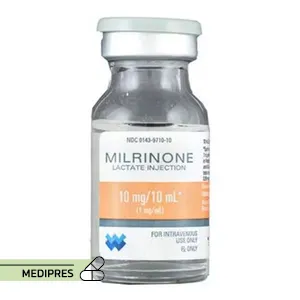
Milrinone
Generic name: milrinone [ MIL-ri-none ]
Brand names: Primacor I.V., Primacor
Drug class: Inotropic agents (Phosphodiesterase inhibitors)
Dosage form: Injection
Route of administration: Intravenous (IV)
Dose: 1 mg/mL, 10 mg/mL
Mechanism of action: Milrinone inhibits phosphodiesterase-3 (PDE3) in cardiac and vascular muscle, increasing intracellular cyclic AMP, leading to increased calcium influx, improved myocardial contractility, and vasodilation.
Drug usage cases: Milrinone is used for short-term treatment of acute decompensated heart failure to improve heart function and reduce symptoms.
Drug contra indications: Milrinone should not be used in patients with known hypersensitivity to the drug or any component of the formulation. It is also contraindicated in patients with severe aortic or pulmonic valvular disease.
Side effects: Common side effects include headache, hypotension, and arrhythmias. Serious side effects may include:
- Ventricular arrhythmias: Increased risk of life-threatening heart rhythms.
- Thrombocytopenia: Risk of low platelet counts.
- Hypotension: Risk of significant drop in blood pressure.
- Angina: Potential for chest pain.
Warnings: Milrinone can cause severe arrhythmias and hypotension. Continuous cardiac monitoring is required during administration. Blood pressure and platelet counts should be monitored regularly. It should be used with caution in patients with electrolyte imbalances or severe renal impairment.
Use during pregnancy or breastfeeding: The safety of milrinone during pregnancy is not well established, and it should be used during pregnancy only if the potential benefit justifies the potential risk to the fetus. It is unknown whether milrinone is excreted in human milk, so caution should be exercised when administered to breastfeeding mothers.