
Quinine Sulfate Capsules
23 June, 2023
Rajani
23 June, 2023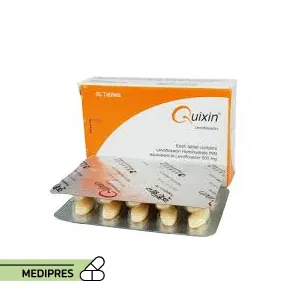
Quixin
Generic name: levofloxacin [ lee-voe-FLOX-a-sin ]
Drug class: Ophthalmic anti-infectives
Brand name: Quixin
Dosage forms: Ophthalmic solution
Route of administration: Topical (applied to the eye)
Dose: Typical dosage: 1 to 2 drops in the affected eye(s) every 2 hours while awake for the first 2 days, followed by 1 to 2 drops every 4 hours while awake for the next 5 days.
Mechanism of action: Gatifloxacin is a fluoroquinolone antibiotic that works by inhibiting bacterial DNA gyrase and topoisomerase IV, enzymes crucial for bacterial DNA replication and repair. This inhibition prevents bacterial growth and replication, ultimately leading to bacterial cell death.
Drug usage cases: Treatment of bacterial conjunctivitis (pink eye) caused by susceptible strains of bacteria.
Drug contraindications: Known hypersensitivity to gatifloxacin, other fluoroquinolones, or any component of the formulation. Use in patients with a history of hypersensitivity reactions to other fluoroquinolones.
Side effects: Common: Eye irritation, burning, stinging, redness, or discomfort. Serious: Severe allergic reactions (e.g., rash, itching, swelling, severe dizziness, trouble breathing), eye pain, changes in vision, sensitivity to light.
Warnings: Do not use if you have a known allergy to gatifloxacin or other fluoroquinolones. Avoid touching the dropper tip to any surface, including the eye, to prevent contamination. Use with caution in patients with a history of eye disorders or who are using other eye medications. Discontinue use and contact your healthcare provider if severe allergic reactions or significant eye problems occur.
Use during pregnancy or breastfeeding: There is limited information on the use of gatifloxacin during pregnancy. Use during pregnancy only if the potential benefit justifies the potential risk to the fetus. It is unknown if gatifloxacin is excreted in breast milk. Consult your doctor before using this medication while breastfeeding.