
Kuvan
19 May, 2024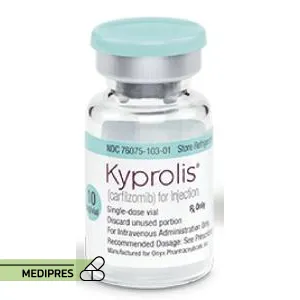
Kyprolis
Drug class: Proteasome inhibitors
Dosage form: Injection
Route of administration: Intravenous (IV)
Dose: Typically, 20 mg/m² to 56 mg/m² depending on the regimen and patient response, administered on specific days of a 28-day cycle.
Mechanism of action: Kyprolis inhibits the chymotrypsin-like activity of the 20S proteasome, leading to an accumulation of polyubiquitinated proteins, which induces apoptosis in multiple myeloma cells.
Drug usage cases: Kyprolis is used to treat multiple myeloma in patients who have received one to three prior therapies.
Drug contra indications: Kyprolis should not be used in patients with known hypersensitivity to carfilzomib or any component of the formulation.
Side effects: Common side effects include fatigue, anemia, nausea, and thrombocytopenia. Serious side effects may include:
- Cardiotoxicity: Risk of heart failure, ischemia, and arrhythmias.
- Pulmonary toxicity: Risk of acute respiratory distress syndrome (ARDS) and pulmonary hypertension.
- Thrombocytopenia: Risk of low platelet counts.
- Infusion-related reactions: Risk of hypersensitivity during or after infusion.
Warnings: Kyprolis can cause severe heart and lung problems, requiring regular monitoring of cardiac and respiratory function. Blood counts should be monitored to manage thrombocytopenia. Patients should be premedicated with corticosteroids to reduce the risk of infusion-related reactions.
Use during pregnancy or breastfeeding: Kyprolis can cause fetal harm and should not be used during pregnancy. Women of childbearing potential should use effective contraception during treatment and for at least six months after the last dose. It is unknown whether carfilzomib is excreted in human milk, so breastfeeding should be avoided during treatment.