
Tamsulosin
23 June, 2023
Telmisartan
23 June, 2023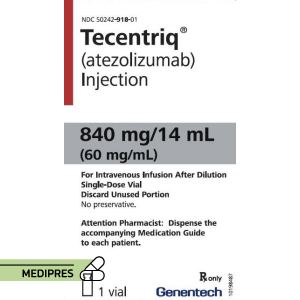
Tecentriq
Description
Generic name:
Atezolizumab
Drug class:
Programmed death-ligand 1 (PD-L1) inhibitor; monoclonal antibody; immunotherapy
Dosage form:
- Vial for intravenous infusion: 1200 mg/20 mL (60 mg/mL)
- Vial for intravenous infusion: 840 mg/14 mL (60 mg/mL)
- Vial for intravenous infusion: 500 mg/10 mL (50 mg/mL)
Root of administration:
Intravenous infusion
Dose:
- 1200 mg every 3 weeks over 60 minutes
- 840 mg every 2 weeks over 60 minutes
- 1680 mg every 4 weeks over 60 minutes
- Adjustments based on indication and patient response; consult label
Mechanism of action:
Atezolizumab is a humanized IgG1 monoclonal antibody that binds PD-L1, blocking its interaction with PD-1 and B7.1 receptors, thereby restoring T-cell–mediated antitumor immune responses.
Drug usage cases:
- Locally advanced or metastatic urothelial carcinoma after platinum-based chemotherapy
- First-line maintenance treatment of metastatic non-small cell lung cancer (NSCLC) with no disease progression on initial chemotherapy
- Metastatic NSCLC in combination with carboplatin and paclitaxel
- Extensive-stage small cell lung cancer in combination with etoposide and platinum chemotherapy
- Unresectable or metastatic hepatocellular carcinoma in combination with bevacizumab
- Metastatic triple-negative breast cancer with PD-L1–positive tumors in combination with nab-paclitaxel
- Off-label: various advanced malignancies in clinical trials or compassionate use
Drug contra indications:
- Hypersensitivity to atezolizumab or any component of the formulation
Side effects:
- Immune-mediated pneumonitis
- Immune-mediated colitis
- Immune-mediated hepatitis
- Immune-mediated nephritis and renal dysfunction
- Immune-mediated endocrinopathies (hypophysitis, thyroid disorders, adrenal insufficiency, type 1 diabetes)
- Severe infusion-related reactions
- Fatigue
- Decreased appetite
- Nausea
- Cough
- Dyspnea
- Musculoskeletal pain
- Constipation
- Diarrhea
- Rash
- Pruritus
- Fever
- Asthenia
- Liver enzyme elevations (AST/ALT)
- Elevated bilirubin
- Increased serum creatinine
- Hypo- or hyperthyroidism
Warnings:
- Immune-related adverse reactions may be severe or fatal; monitor regularly and initiate corticosteroids for management
- Infusion-related reactions; slow or discontinue infusion and provide supportive care
- Hepatotoxicity; monitor liver function tests prior to and during treatment
- Renal toxicity; monitor renal function
- Pneumonitis; monitor for new or worsening respiratory symptoms
- Embryo-fetal toxicity; avoid pregnancy during and after treatment
- Avoid live vaccines during therapy and until immune recovery
- Potential for immune-related myocarditis and neurological toxicities (e.g., Guillain-Barré syndrome, myasthenia gravis)
- Compromised wound healing; consider delaying therapy in patients with non-healing wounds
Use during pregnancy or breastfeeding:
Based on animal studies, atezolizumab may cause fetal harm when administered to pregnant women. Women of reproductive potential should use effective contraception during treatment and for at least five months after the last dose. Breastfeeding is not recommended during treatment and for at least five months after the last dose due to potential for serious adverse reactions in the breastfed infant.