
Ubiquinone
23 June, 2023
Uloric
23 June, 2023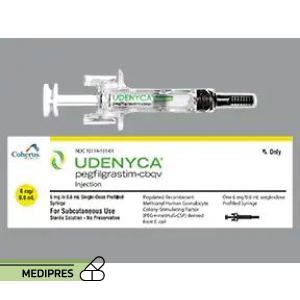
Udenyca
Generic name: Pegfilgrastim-cbqv
Drug class: Immunostimulant, Granulocyte Colony-Stimulating Factor
Dosage form: Injection, Solution
Root of administration: Subcutaneous
Dose: 6 mg per 0.6 mL
Mechanism of action: Pegfilgrastim-cbqv is a biosimilar of filgrastim, a granulocyte colony-stimulating factor (G-CSF). It stimulates the production of neutrophils in the bone marrow, thereby increasing the number of white blood cells to help reduce the risk of infection in patients undergoing chemotherapy.
Drug usage cases:
- Decrease the incidence of infection, as manifested by febrile neutropenia, in patients with non-myeloid malignancies receiving myelosuppressive anti-cancer drugs associated with a clinically significant incidence of febrile neutropenia.
- Increase survival in patients acutely exposed to myelosuppressive doses of radiation (Hematopoietic Subsyndrome of Acute Radiation Syndrome).
Drug contraindications:
- Patients with a history of serious allergic reactions to pegfilgrastim products or filgrastim products, including anaphylaxis.
Side effects:
- Bone pain
- Pain in extremities
- Splenic rupture
- Acute respiratory distress syndrome (ARDS)
- Serious allergic reactions, including anaphylaxis
- Sickle cell crises
- Glomerulonephritis
- Leukocytosis (white blood cell count ≥ 100 x 10⁹/L)
- Thrombocytopenia (low platelet count)
- Capillary leak syndrome
- Potential tumor growth stimulatory effects on malignant cells
- Myelodysplastic syndrome (MDS) and acute myeloid leukemia (AML) in patients with breast and lung cancer
- Aortitis
- Transient positive bone imaging changes
Warnings:
- Fatal splenic rupture: Evaluate patients who report left upper abdominal or shoulder pain for an enlarged spleen or splenic rupture.
- Acute respiratory distress syndrome (ARDS): Evaluate patients who develop fever, lung infiltrates, or respiratory distress. Discontinue UDENYCA in patients with ARDS.
- Serious allergic reactions, including anaphylaxis: The majority of reported events occurred upon initial exposure. Allergic reactions, including anaphylaxis, can recur within days after the discontinuation of initial anti-allergic treatment. Permanently discontinue UDENYCA in patients with serious allergic reactions.
- Sickle cell crises: Severe and sometimes fatal crises have occurred. Discontinue UDENYCA if sickle cell crisis occurs.
- Glomerulonephritis: The diagnoses were based upon azotemia, hematuria (microscopic and macroscopic), proteinuria, and renal biopsy. Generally, events resolved after dose reduction or discontinuation. Evaluate and consider dose-reduction or interruption of UDENYCA if causality is likely.
- Leukocytosis: White blood cell counts of 100 x 10⁹/L or greater have been observed in patients receiving pegfilgrastim products. Monitoring of complete blood count (CBC) during UDENYCA therapy is recommended.
- Thrombocytopenia: Thrombocytopenia has been reported in patients receiving pegfilgrastim. Monitor platelet counts.
- Capillary leak syndrome: Has been reported after G-CSF administration, including pegfilgrastim products, and is characterized by hypotension, hypoalbuminemia, edema, and hemoconcentration. Episodes vary in frequency, severity and may be life-threatening if treatment is delayed. If symptoms develop, closely monitor and give standard symptomatic treatment, which may include a need for intensive care.
- Potential for tumor growth stimulatory effects on malignant cells: The possibility that pegfilgrastim products act as a growth factor for any tumor type, including myeloid malignancies and myelodysplasia, diseases for which pegfilgrastim products are not approved, cannot be excluded.
- Myelodysplastic syndrome (MDS) and acute myeloid leukemia (AML) in patients with breast and lung cancer: MDS and AML have been associated with the use of pegfilgrastim in conjunction with chemotherapy and/or radiotherapy in patients with breast and lung cancer. Monitor patients for sign and symptoms of MDS/AML in these settings.
- Aortitis: Has been reported in patients receiving pegfilgrastim products, occurring as early as the first week after start of therapy. Manifestations may include generalized signs and symptoms such as fever, abdominal pain, malaise, back pain, and increased inflammatory markers (e.g., c-reactive protein and white blood cell count). Consider aortitis when signs and symptoms develop without known etiology. Discontinue UDENYCA if aortitis is suspected.
- Nuclear imaging: Increased hematopoietic activity of the bone marrow in response to growth factor therapy has been associated with transient positive bone imaging changes. Consider when interpreting bone imaging results.
Use during pregnancy or breastfeeding: It is not known whether UDENYCA is safe to use during pregnancy or breastfeeding. However, UDENYCA is typically used with chemotherapy, and most chemotherapy drugs are not safe to use during pregnancy or breastfeeding. If you are pregnant, planning to become pregnant, breastfeeding, or planning to breastfeed, discuss with your doctor whether UDENYCA is appropriate for you.