
Yaz
23 June, 2023
Yondelis
23 June, 2023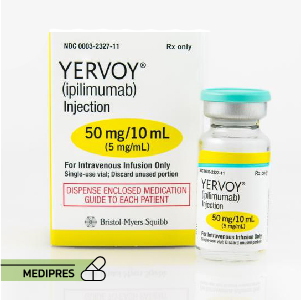
Yervoy
Generic name: Ipilimumab
Drug class: Anti-CTLA-4 monoclonal antibodies
Dosage forms: Intravenous infusion
Root of administration: Intravenous (IV)
Dose: 50 mg/10 mL, 200 mg/40 mL
Mechanism of action: Yervoy is an immunotherapy that blocks a protein (antigen) that can stop your immune system from working properly and attacking cancer cells. When Yervoy has blocked the protein (CTLA-4) the immune system is able to find and kill the cancer cells. Yervoy is from the class of medicines called immune checkpoint inhibitors, and because it blocks the T-lymphocyte antigen 4 (CTLA-4), it is called a CTLA-4 inhibitor.
Drug usage cases: Yervoy (ipilimumab) is a monoclonal antibody used to treat specific cancers including melanoma, non-small cell lung cancer (NSCLC), pleural mesothelioma, esophageal cancer, kidney cancer (RCC), liver cancer, or colorectal cancer. Yervoy can be used alone or combined with another cancer medicine such as Opdivo (nivolumab).
Drug contra indications: You should not receive this medicine if you are allergic to the active ingredient ipilimumab or any of the inactive ingredients. To make sure Yervoy is safe for you, tell your doctor if you have ever had:
liver problems; an autoimmune disorder (lupus, sarcoidosis, Crohn’s disease, ulcerative colitis); an organ transplant or stem cell transplant; or a nerve-muscle disorder, such as myasthenia gravis, or Guillain-Barre syndrome. This medicine is not approved for use by anyone younger than 12 years old and for some types of cancer, it is used only in adults.
Side effects: Get emergency medical help if you have signs of an allergic reaction to this medicine (hives, difficulty breathing, swelling in your face or throat) or a severe skin reaction (fever, sore throat, burning eyes, skin pain, red or purple skin rash with blistering and peeling). Some side effects may occur during the injection. Tell your caregiver if you feel dizzy, light-headed, short of breath, itchy, tingly, chilled, or feverish. Serious and sometimes fatal reactions may occur during treatment with this medicine or months after your last dose. Call your doctor right away if you have symptoms such as:
severe or ongoing diarrhea, severe stomach pain, bloody or tarry stools; fever, swollen glands, body aches; new or worsening skin rash, itching, or blistering; painful sores in mouth or nose, throat, or genital area; chest pain, irregular heartbeats; severe muscle weakness, ongoing pain in your muscles or joints; numbness or tingling in your hands or feet; vision problems, eye pain or redness; lung problems – new or worsening cough, chest pain, feeling short of breath; kidney problems – little or no urination, swelling in your feet or ankles, blood in your urine; liver problems – right-sided upper stomach pain, tiredness, bruising or bleeding, dark urine, yellowing of your skin or eyes; signs of a hormonal disorder – frequent or unusual headaches, lack of energy, dizziness, fainting, mood or behavior changes, increased thirst or urination, feeling cold, weight gain, or weight loss; or symptoms of brain swelling – confusion, headache, memory problems, hallucinations, neck stiffness, drowsiness, seizure (convulsions). Your cancer treatments may be delayed or permanently discontinued if you have certain side effects.
Warnings: Serious and sometimes fatal reactions may occur during treatment with this medicine or months after your last dose. Call your doctor at once if you have: chest pain, cough, shortness of breath, vision changes, severe muscle pain or weakness, diarrhea and severe stomach pain, blood in your stools, little or no urinating, swelling, bruising or bleeding, dark urine, yellowing of the skin or eyes, confusion, hallucinations, a seizure, skin blistering, or a hormonal disorder (frequent headaches, feeling light-headed, increased thirst or urination, feeling cold, weight gain or loss). Before you receive Yervoy, tell your doctor if you have liver damage, an autoimmune disorder such as lupus or sarcoidosis, Crohn’s disease, ulcerative colitis, or if you have received an organ transplant.
Use during pregnancy or breastfeeding: Tell your doctor if you are pregnant or plan to become pregnant while using this medicine. Yervoy may harm an unborn baby. You may need to have a negative pregnancy test before starting this treatment. Use effective birth control to prevent pregnancy while you are using this medicine and for at least 3 months after your last dose. Tell your doctor if you become pregnant. If you are pregnant, your name may be listed on a pregnancy registry to track the effects of ipilimumab on the baby. Do not breastfeed while using this medicine, and for at least 3 months after your last dose.